

Mixing Textures: Layering Timber, Matte and Stone Finishes in Modern Kitchens
Modern kitchen design increasingly relies on texture rather than colour alone to create depth and visual interest. Instead of relying on a single material, many contemporary kitchens combine timber grain, matte cabinetry and stone surfaces to produce a balanced and layered aesthetic.
This approach has become especially popular in Western Sydney and the Blue Mountains, where homes often blend contemporary living with natural surroundings. When materials are thoughtfully combined, they can create a kitchen that feels cohesive, functional and visually engaging.
For homeowners planning a renovation, understanding how different finishes interact is key to achieving a well-balanced result.
Why Texture Plays an Important Role in Kitchen Design
Texture is a fundamental design element that influences how a space feels as well as how it looks. In kitchens, finishes such as timber grain, matte cabinetry and natural or engineered stone introduce variation that prevents a space from feeling flat or overly uniform.
Layering textures can achieve several design outcomes:
- Visual depth: Different surfaces reflect light in different ways, creating subtle contrast.
- Balanced aesthetics: Combining materials prevents one finish from dominating the entire room.
- Practical functionality: Some materials are better suited to high-use areas such as benchtops or islands.
In Australian homes, this approach also reflects broader interior design trends that favour natural materials and tactile finishes. Timber adds warmth, matte surfaces provide softness, and stone introduces durability and structure.
When these materials are integrated through careful design and cabinetry planning, the result is a kitchen that feels refined yet practical.
Timber: Bringing Warmth and Natural Character
Timber has long been used in Australian kitchens because it introduces warmth and organic texture. Whether used as a feature element or integrated throughout cabinetry, timber finishes help soften modern interiors.
Common ways timber is incorporated include:
- Island paneling
- Open shelving or feature cabinetry
- Accent panels within matte cabinetry layouts
In homes throughout suburbs such as Blaxland, Glenbrook, Lawson and Wentworth Falls, timber elements often complement the surrounding landscape and architectural character. Even in more contemporary homes across Penrith, Glenmore Park or Liverpool, timber accents can balance minimalist cabinetry.
Advances in manufacturing have also expanded the options available. Many modern laminate or veneer finishes replicate natural grain patterns while offering durability suitable for everyday kitchen use. This allows designers to maintain the visual appeal of timber while ensuring surfaces remain practical for busy households.
When layered correctly, timber becomes the element that anchors the overall design and introduces warmth into the space.
Matte Cabinetry: Soft, Contemporary and Versatile
Matte finishes have become a defining feature of contemporary kitchens across Australia. Unlike glossy surfaces, matte cabinetry absorbs light rather than reflecting it, which creates a softer and more understated appearance.
Matte cabinetry works particularly well when paired with textured materials such as timber and stone. Because matte surfaces are visually subtle, they allow other finishes to stand out without overwhelming the space.
Popular matte tones include:
- Soft white
- Warm greys
- Charcoal
- Neutral beige tones
These colours form a neutral base that supports layered materials. For example, matte white cabinetry paired with timber shelving and a stone benchtop can produce a balanced and modern composition.
Two-tone cabinetry designs are another effective approach. In many Western Sydney homes, designers pair matte upper cabinets with darker lower cabinets or feature islands, creating contrast while maintaining cohesion.
Matte finishes also align with the clean lines commonly found in contemporary joinery. Handle-less cabinetry or integrated handles further reinforce the streamlined appearance.
Stone Surfaces: Durability and Structural Balance
Stone surfaces provide a strong visual and functional anchor in a layered kitchen design. Whether natural stone or engineered alternatives are used, these materials often appear in benchtops, splashbacks or waterfall island edges.
Stone introduces several qualities that complement timber and matte finishes:
- Durability: Suitable for food preparation areas and heavy use.
- Visual contrast: The patterning and veining create a focal point.
- Timeless appeal: Stone surfaces remain consistent with long-term design trends.
In kitchens where timber cabinetry provides warmth and matte finishes deliver subtlety, stone becomes the structural centrepiece of the room.
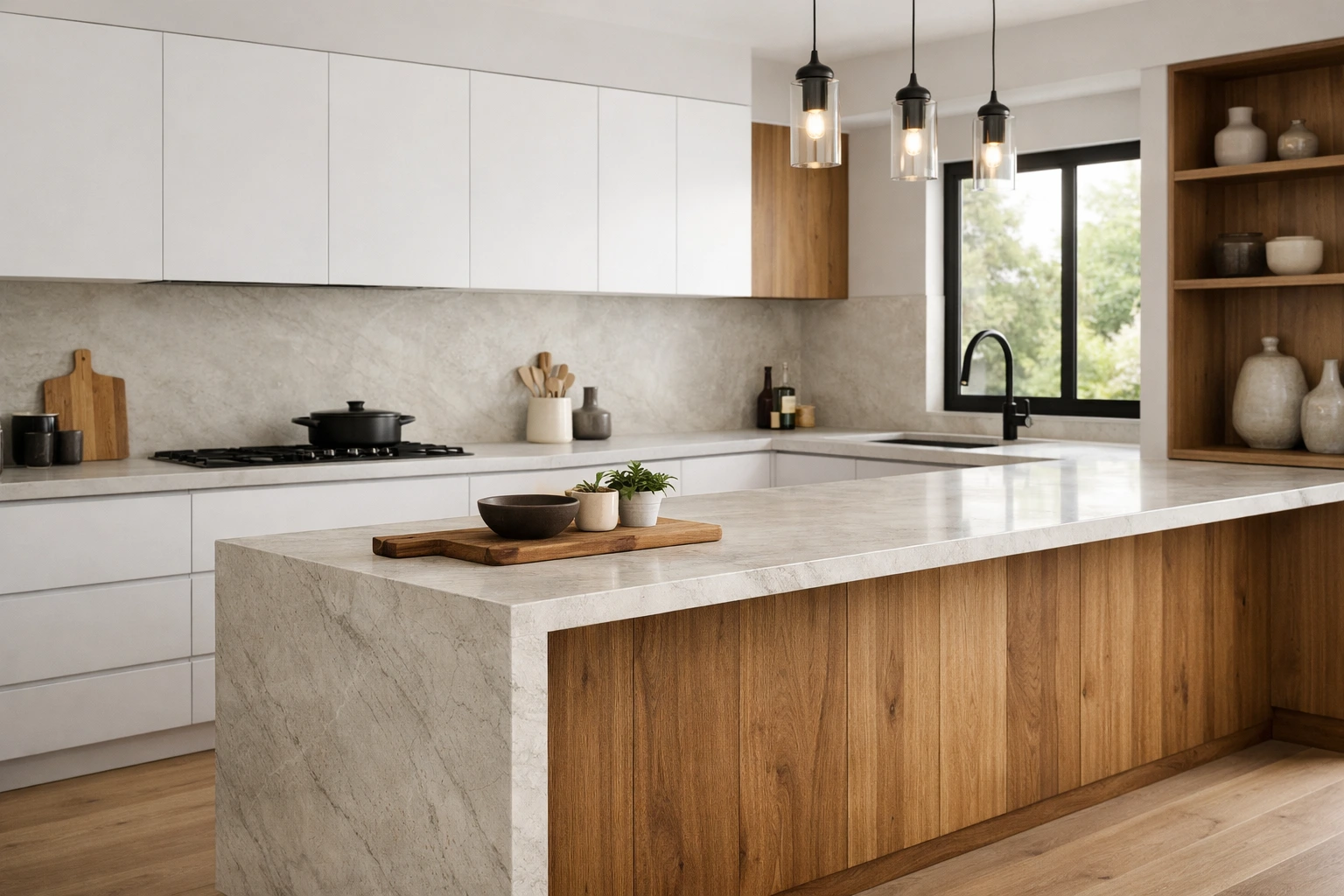
For example, a kitchen might feature:
- Matte white wall cabinets
- Timber island panelling
- A stone waterfall benchtop
This combination introduces three distinct textures while maintaining a cohesive palette.
Because stone surfaces often draw attention, designers typically use them strategically — such as on an island or main benchtop — rather than throughout the entire kitchen.
Designing a Balanced Material Palette
The key to successfully mixing textures lies in maintaining balance. When too many finishes are introduced without structure, a kitchen can quickly feel visually cluttered.
Professional kitchen designers often follow several principles when layering materials:
Limit the number of primary finishes
Most well-balanced kitchens rely on three dominant textures. A typical combination might include matte cabinetry, timber accents and stone benchtops.
Maintain a consistent colour palette
Even when textures vary, colours should remain complementary. Neutral palettes allow textures to stand out without competing visually.
Use texture to define zones
Different finishes can help distinguish areas within an open-plan kitchen. For example:
- Timber for an island or breakfast bar
- Matte cabinetry for storage walls
- Stone for preparation areas
This subtle zoning supports both visual structure and functional organisation.
Consider lighting conditions
Natural and artificial lighting influence how textures appear. Matte surfaces absorb light, while stone and timber may reflect it differently depending on grain and pattern.
A design that looks balanced in daylight should also be tested under evening lighting conditions.
Precision Joinery and Material Integration
Successfully combining multiple textures requires careful planning and precise joinery. Alignment of grain patterns, cabinet edges and material transitions plays an important role in achieving a cohesive finish.
At A-Team Kitchens & Joinery, all cabinetry is designed and manufactured in-house using Australian-made board and materials. This local manufacturing approach allows for greater control over detailing, ensuring that timber patterns, matte cabinetry and stone surfaces integrate seamlessly.
In-house production also enables precise customisation. Elements such as cabinet profiles, panel spacing and edge finishes can be adjusted to support the overall material palette.
For homeowners exploring renovation options, more information about custom kitchen design and finishes can be found here:
Exploring Texture Combinations in Person
While digital designs and inspiration images can provide ideas, materials often look and feel different when viewed in person. Texture, grain depth and surface finish are best understood through physical samples.
For this reason, visiting a showroom can be valuable when selecting materials. Comparing timber finishes, matte cabinetry colours and stone surfaces side by side helps homeowners visualise how different textures interact.
A-Team Kitchens & Joinery operates two showrooms:
- Penrith, located within the manufacturing facility and convenient for Western Sydney homeowners
- Blaxland, serving clients across the Blue Mountains including Springwood, Leura, Katoomba and Blackheath
Seeing materials in real lighting conditions allows homeowners to evaluate colour tones, surface feel and texture combinations more accurately.
Creating Kitchens That Balance Texture and Function
Layering timber, matte and stone finishes is one of the most effective ways to create kitchens that feel contemporary yet timeless. Each material contributes a different quality:
- Timber introduces warmth and natural character
- Matte finishes provide softness and modern simplicity
- Stone delivers durability and visual structure
When these materials are combined thoughtfully, they produce kitchens that feel balanced, practical and visually engaging.
Because every home has its own layout, architecture and lighting conditions, the most successful results typically come from custom joinery solutions designed around the specific space.
Homeowners planning a kitchen renovation can explore material combinations, cabinetry styles and finishes by visiting the A-Team Kitchens & Joinery showrooms in Penrith or Blaxland, where a range of textured surfaces and joinery options can be viewed in person.